Blog / Toyota Crown

What’s Under the Hood of the 2023 Toyota Crown?

Performance Specifications of the 2023 Toyota Crown 

Straddling the thin line between a sedan and an SUV, the 2023 Toyota Crown is Toyota’s way of making the large luxury sedan popular among Americans. Though it is introduced as a replacement for the discontinued Avalon, the Crown is a class apart. It blends the refined styling of a premium sedan, the flowing shape of a sports car, and the elevated cabin of an SUV! What’s more, it delivers an outstanding performance that is bound to impress car enthusiasts. At San Francisco Toyota in San Francisco, CA, we elaborate on the performance specifications of the 2023 Toyota Crown. 


Does the 2023 Toyota Crown Have a Hybrid Engine? 

Under the hood, the 2023 Crown offers a choice of two engines: the 2.5-liter inline 4-cylinder engine or the Hybrid MAX 2.4-liter inline 4-cylinder turbocharged engine. The XLE and Limited trims of the Crown are equipped with a highly efficient hybrid system that has a newly developed, high-output bipolar nickel-metal hydride battery. This engine delivers an exceptional 340 combined net horsepower and 400 lb.-ft. of torque. Additionally, the electric motor is strategically placed between the engine and transmission, which makes the 2023 Toyota Crown capable of accelerating from 0 to 60 mph in just 7.5 seconds.   

How Does the 2023 Toyota Crown Improve Driving Confidence? 

The all-wheel-drive system comes standard in the 2023 Toyota Crown. It automatically supplies power to the rear wheels to improve traction. The Crown boasts a design that instinctively operates in FWD mode when more muscle is unnecessary. Thus, irrespective of road and weather conditions, the 2023 Toyota Crown gives you the peace of mind to power through. 

Finance the 2023 Toyota Crown in San Francisco, CA! 

If the features of the 2023 Toyota Crown have intrigued you and you want to buy it, you can visit us at San Francisco Toyota in San Francisco, CA. You can also get online pre-approval for financing at our dealership, notwithstanding your financial situation or level of credit. 


Read more: Get a First Look at the New 2023 Toyota Crown 

Posted in:

Recommended Posts

Toyota Certified Used Vehicles at San Francisco Toyota

Toyota Certified vs. Regular Used: What San Francisco Buyers Should Know

If you're shopping around for a used Toyota in San Francisco, one of the biggest decisions is whether to choose a Toyota Certified Used Vehicle or a regular pre-owned vehicle. Both are good options, and the right choice depends on your budget, the age and mileage of the vehicle, and how much additional warranty coverage and inspection history matter to you. Toyota offers two certification levels, Gold Certified and Silver Certified, which makes it easier to find a Certified Toyota across a wider range of model years and price points. What Makes a Used Toyota Certified? A Toyota Certified Used Vehicle must meet Toyota's eligibility requirements and complete its certification process before it can be sold as Certified. That process includes a vehicle inspection, review of the vehicle's CARFAX® history, and any necessary reconditioning by Toyota dealer-trained technicians. Certified vehicles also include Toyota-backed warranty and roadside-assistance benefits based on whether the vehicle earns Gold or Silver certification. A regular used vehicle does not automatically include those same certification requirements or program benefits. Toyota Gold Certified vs. Silver Certified The biggest differences between Gold and Silver certification are the vehicle's age, mileage, and included warranty coverage. Toyota Gold Certified Gold Certified is designed for newer, lower-mileage Toyota vehicles. An eligible vehicle must: Be no more than six model years old Have 85,000 miles or fewer Meet Toyota's inspection and vehicle-history requirements Gold Certified vehicles include additional benefits such as Toyota-backed comprehensive and powertrain warranty coverage and 24-hour roadside assistance. Gold can be a strong option for shoppers who want a late-model used Toyota with more extensive added coverage. Toyota Silver Certified Silver Certified allows qualifying older or higher-mileage Toyota vehicles to enter the Certified program. Toyota currently allows eligible Silver Certified vehicles up to: 10 model years old 125,000 miles Silver Certified vehicles also complete Toyota's certification process and include a CARFAX® Vehicle History Report, Toyota-backed powertrain warranty coverage, and roadside assistance.Silver can be a good fit for shoppers who want to balance affordability with some of the additional protections of Toyota certification. TCUV Gold vs. Silver at a Glance Gold Certified Silver Certified Vehicle age Up to 6 model years Up to 10 model years Maximum mileage 85,000 miles 125,000 miles Toyota certification process Yes Yes CARFAX® Vehicle History Report Included Included Toyota-backed warranty More extensive Limited powertrain coverage Roadside assistance Included Included *Program terms, eligibility requirements, and warranty limitations apply. Review Toyota Certified program information for complete details. When Is a Toyota Certified Used Vehicle Worth It? A Toyota Certified Used Vehicle may be worth considering if you place a high value on: Additional warranty protection A standardized certification process Vehicle-history information Roadside assistance Buying a used vehicle with added Toyota-backed coverage For some shoppers, those benefits can provide additional confidence when purchasing a pre-owned vehicle. The key is to compare the Certified vehicle's price and coverage with similar non-certified options. When Might a Regular Used Toyota Make More Sense? A regular used Toyota may make more sense if: Your main priority is keeping the purchase price as low as possible You're comfortable evaluating the vehicle's condition and history independently You're considering a Toyota that falls outside Certified age or mileage limits The specific used vehicle you want offers the right combination of condition, price, and ownership history Certification is an added benefit, but it doesn't automatically mean a Certified vehicle is the best fit for every budget or shopper. Who Is Gold Certified Best For? Gold Certified is usually best suited for shoppers who want: A newer model year Toyota Lower mileage More extensive warranty coverage Additional protection while still buying used For someone comparing a late-model Certified RAV4, Camry, Highlander, Tacoma, or Corolla with a similar non-certified vehicle, Gold certification can be an important part of the value comparison. Who Is Silver Certified Best For? Silver Certified can be especially useful for shoppers looking at: Older Toyota models Higher-mileage vehicles Lower price points Used vehicles that still qualify for Toyota certification It gives buyers access to Certified benefits across a wider range of pre-owned Toyotas. What Should You Compare Besides Certification? Whether you're considering Gold Certified, Silver Certified, or a regular used Toyota, certification should be only one part of the decision. It is also worth comparing: Vehicle age Mileage Maintenance history Accident or damage history Overall condition Features and trim level Warranty coverage Purchase price Financing options Total cost of ownership Two vehicles can have similar prices but offer very different value depending on their condition, mileage, warranty coverage, and history. Toyota Certified Used Vehicle FAQs What qualifies a Toyota for Gold Certification? A Gold Certified Toyota must be no more than six model years old, have 85,000 miles or fewer, and meet Toyota's certification, inspection, and vehicle-history requirements. What qualifies a Toyota for Silver Certification? Toyota's current Silver Certified program includes eligible vehicles up to 10 model years old with 125,000 miles or fewer, subject to Toyota's program requirements. Is Gold Certified better than Silver Certified? Gold offers more extensive warranty coverage and applies to newer, lower-mileage vehicles. Silver expands certification to older and higher-mileage Toyotas.The better option depends on the specific vehicle, your budget, and how much additional coverage you want. Are Toyota Certified vehicles inspected? Yes. Toyota Certified Used Vehicles must complete Toyota's certification inspection process before qualifying for the program. Do Toyota Certified vehicles include a CARFAX report? Yes. Toyota Certified Used Vehicles include a CARFAX® Vehicle History Report. Does Toyota Certified include roadside assistance? Yes. Both Gold and Silver Certified vehicles include roadside-assistance benefits, although the coverage terms differ by certification level. Can Toyota Certified vehicles be financed? Yes. Toyota Certified Used Vehicles can be financed, and qualified buyers may have access to Toyota Financial Services programs depending on current offers. Shop Toyota Certified Used Vehicles in San Francisco The best way to decide between Toyota Certified and regular used is to compare actual vehicles side by side. San Francisco Toyota offers Toyota Certified Used Vehicles along with a broader selection of pre-owned cars, used vehicles under $15k, SUVs, trucks, hybrids, and electrified vehicles. Browse our current Toyota Certified Used Vehicle inventory online to compare Gold Certified, Silver Certified, and other used Toyota options.


San Francisco Toyota - Finish Line Sponsor

San Francisco Toyota Supports the Richmond District YMCA’s 2026 Jog in the Fog 5K

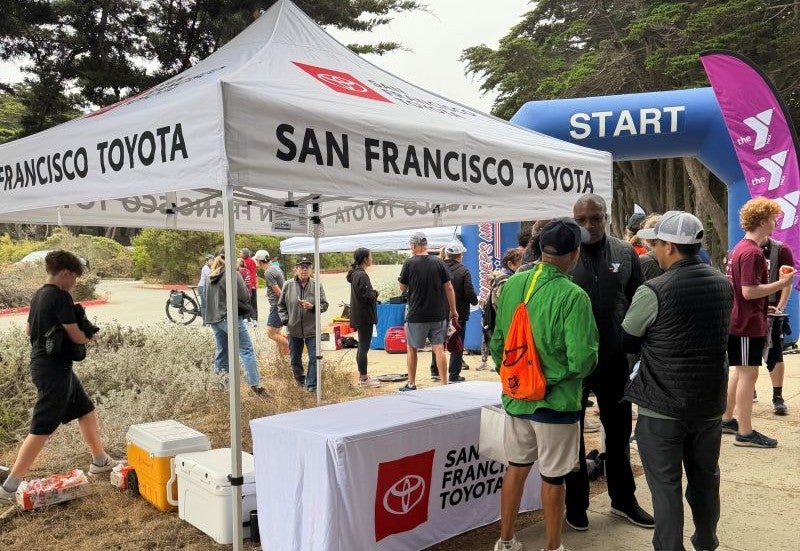
On Sunday, September 20, 2026, San Francisco Toyota was proud to serve as the Finish Line Sponsor of the Richmond District YMCA’s 14th Annual Jog in the Fog 5K Family Fun Run at Lands' End in San Francisco. Nearly 400 participants, ranging from kids to adults, took part in this year’s race. Despite a chilly San Francisco morning, the energy from the runners, organizers, volunteers, sponsors, and supporters created a great atmosphere throughout the event. As the Finish Line Sponsor, San Francisco Toyota was located directly behind the finish line, where a red 2026 Toyota 4Runner Platinum and San Francisco Toyota feather banners helped welcome runners as they completed the course. After crossing the finish line, participants received handmade medals created by kids from the YMCA, along with co-branded San Francisco Toyota, YMCA, and Jog in the Fog cooling towels and mini Gatorades from the San Francisco Toyota tent. Supporting the communities we serve has long been important to San Francisco Toyota. Events like Jog in the Fog are a great example of how local organizations such as the Richmond District YMCA bring people together while promoting health, family, and connection within the San Francisco community. We were grateful for the opportunity to play a small part in this year’s event. On behalf of San Francisco Toyota, thank you to the Richmond District YMCA, the volunteers, fellow sponsors, and everyone who participated for making this year’s Jog in the Fog such a memorable community event.

Hybrid vs. PHEV for SF Drivers

Hybrid vs. Plug-in Hybrid: Which Is Better for San Francisco Drivers?

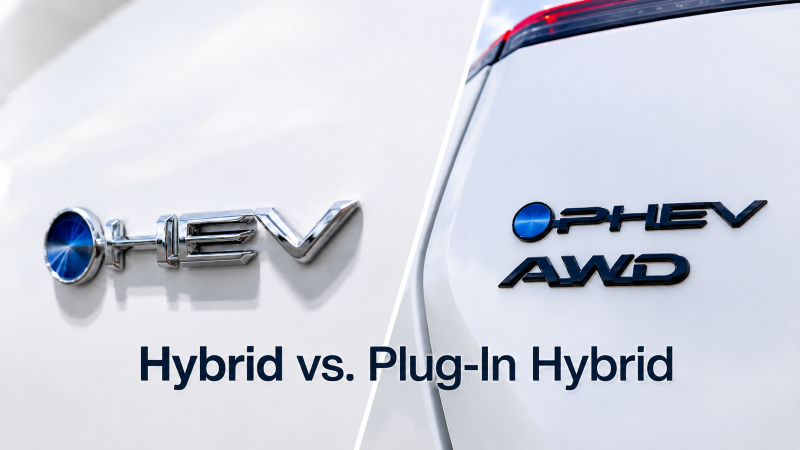
For San Francisco drivers considering their next Toyota, choosing between a hybrid and a plug-in hybrid can be just as important as choosing the model itself. Both can reduce fuel consumption compared with a traditional gas-only vehicle, but they fit different driving habits. Your daily mileage, access to charging, parking situation, and how often you leave the city can all affect which option makes more sense. Here are some things to consider. What's the Difference Between a Hybrid and a Plug-in Hybrid? A traditional hybrid combines a gasoline engine with an electric motor and battery. The vehicle manages the two power sources automatically, and the battery recharges while you drive through regenerative braking and the gasoline engine. You don't need to plug it in. A plug-in hybrid, or PHEV, uses a larger battery that can be charged from an external power source. That allows the vehicle to complete some trips using electricity before switching to operate like a hybrid once the battery's electric range has been used. The basic decision is therefore simple: Hybrid: No charging or plugging-in required. Plug-in hybrid: Gives you an opportunity to drive on electricity, but access to charging becomes more valuable. When a Hybrid Makes Sense in San Francisco For many city residents, a conventional hybrid offers one major advantage: simplicity. If you street park every day, live in an apartment without dedicated charging, or routinely use different parking garages, a hybrid lets you benefit from fuel savings without changing the way you refuel. That can make hybrids especially practical for drivers who regularly travel between neighborhoods in the city or commute around the Bay Area but don't have reliable access to an outlet or charging station at home. Stop-and-go city driving is also where hybrid systems can be particularly useful because regenerative braking captures and stores energy as the vehicle slows. For many San Francisco car shoppers, the ability to simply get in and drive without thinking about charging may outweigh the additional electric capability of a plug-in hybrid. When a Plug-in Hybrid May Be the Better Choice A plug-in hybrid becomes a much more compelling option when you have reliable access to charging. If you have access to a charger at home, at work, or somewhere you visit regularly, many shorter trips may be completed primarily using electricity. That can be especially attractive in San Francisco, where daily errands and neighborhood trips often involve relatively short distances. A plug-in hybrid can also provide flexibility that a fully electric vehicle does not. When you leave San Francisco for a longer weekend trip, the gasoline engine remains available after the battery's electric driving range has been used. For someone who wants electric driving around the city but frequently drives up to Marin, down the Peninsula, to Lake Tahoe, down to LA, or other destinations around California, that flexibility can be appealing. What If You Live in an Apartment? This is one of the most important questions for San Francisco car shoppers. If your building doesn't offer charging and you don't have a dependable charging option nearby, buying a plug-in hybrid simply because it has an electric driving mode may not provide its full benefit. You can still drive a plug-in hybrid without charging it every day, but the ownership experience makes the most sense when you can regularly recharge the battery. In that situation, a traditional hybrid may be the easier choice. If your apartment or workplace does provide charging, however, the calculation changes considerably. Think About Your Actual Weekly Driving Instead of starting with fuel economy numbers alone, think about what your typical week looks like. Ask yourself: How many miles do I usually drive each day? Do I have a consistent place to charge? Is most of my driving inside San Francisco? Do I regularly commute around the Bay Area? How often do I take longer weekend trips? Do I want the simplest possible ownership experience, or do I want to maximize electric driving? Those questions usually make the decision much clearer. The 2026 Toyota RAV4 Is a Good Example The 2026 Toyota RAV4 illustrates how Toyota's electrified lineup is changing. The RAV4 is now only available in Hybrid or Plug-in Hybrid powertrains, giving SUV shoppers two different ways to add electrification without moving to a fully electric vehicle. For a San Francisco driver without convenient charging, the 2026 RAV4 may offer the easier ownership experience. For someone who can charge regularly and wants to complete more local driving on electricity, the RAV4 Plug-in Hybrid may be worth considering. Neither answer is automatically right for everyone. Find the Right Toyota for the Way You Drive The best way to choose between a hybrid and plug-in hybrid is to match the vehicle to your actual routine. At San Francisco Toyota, our team can help you compare Toyota hybrid and plug-in hybrid options based on your commute, parking situation, charging access, passenger needs, and the kinds of trips you make around San Francisco and the Bay Area. Browse our current Toyota inventory, begin the purchase journey on SmartPath, or visit San Francisco Toyota at 3800 Geary Blvd. or 1701 Van Ness Ave. to compare your options and test drive both in person.